What Exactly Does Industrial Automation Mean? How Is Human Intervention Reduced? Industrial automation, in the simplest terms, refers to a broad range of technologies that minimize human intervention by predefining...
What Exactly Does Industrial Automation Mean? How Is Human Intervention Reduced?
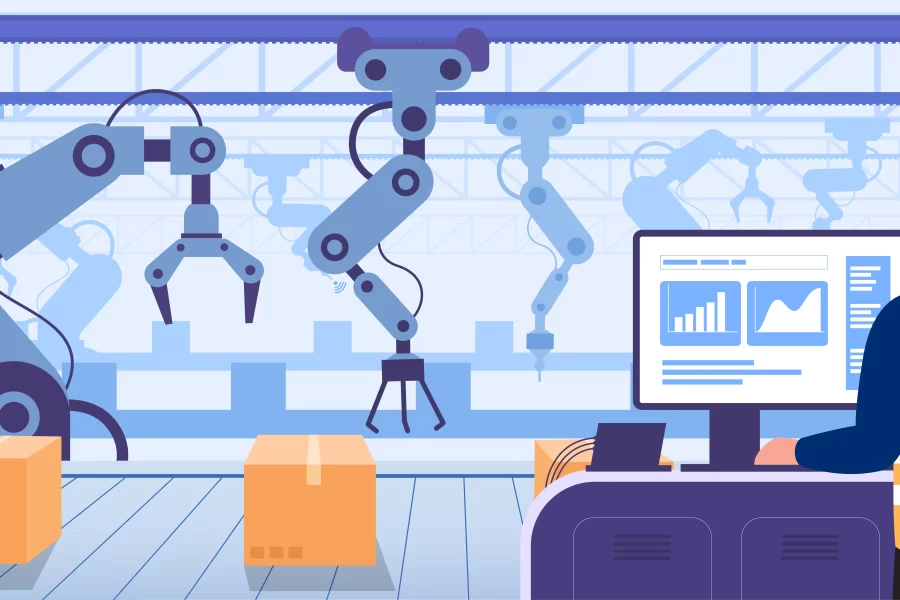
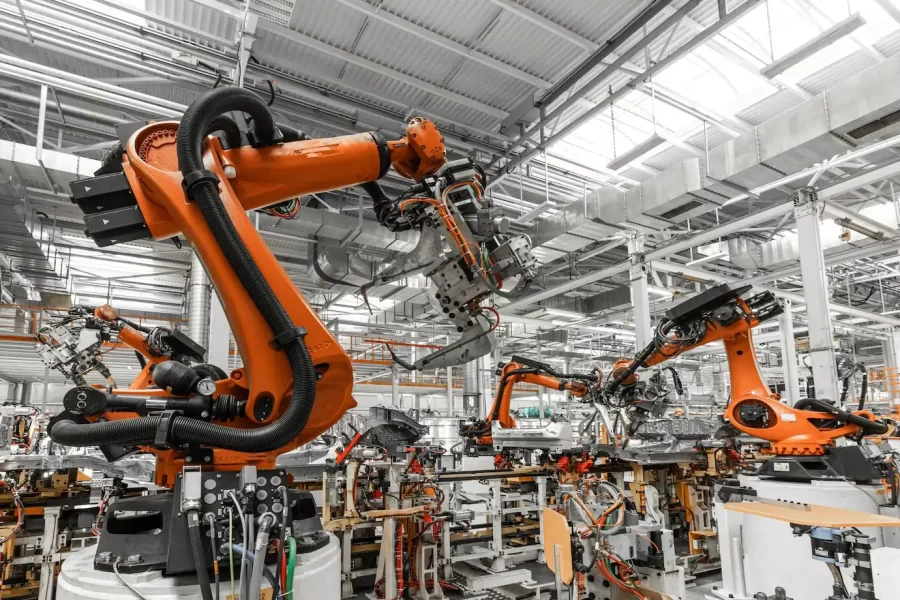
Industrial automation, in the simplest terms, refers to a broad range of technologies that minimize human intervention by predefining decision criteria, sub-process relationships, and associated actions—and implementing these structures within machines. The goal of automation is to make production processes more efficient and error-free.
These complex systems typically combine mechanical, hydraulic, pneumatic, electrical, electronic devices, and computer technologies. The level of automation depends on the percentage of total work shared between humans and machines.
Recently, the convergence of Operational Technology (OT)—hardware and software that monitor and control physical processes—with Information Technology (IT), has given rise to concepts like Industry 4.0 and the Industrial Internet of Things (IIoT). Thanks to this integration, industrial processes are becoming smarter and more efficient. For example, IIoT comprises sensors, equipment communication, automation systems, and analytics platforms; the collected data is processed and analyzed to give managers valuable real-time insights.
What Is Industrial Automation and Why Does It Play a Critical Role in Smart Manufacturing?
Industrial automation is essentially a comprehensive technology ecosystem that predefines decision criteria and sub-process relationships, implements these through machines, and therefore reduces human intervention. This means the overall workload is shared between humans and machines. Its ultimate purpose is to make production processes more efficient and error-free.
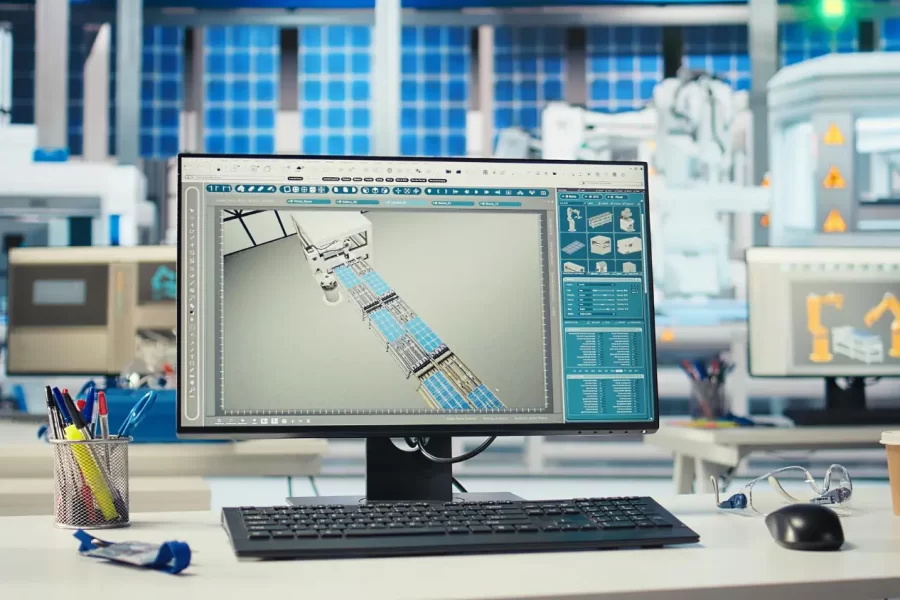
The widely discussed concept of the “Industrial Internet of Things (IIoT)” is essentially automation technology adapted to industrial environments. Through this integration, a cyber-physical system emerges, offering end-to-end solutions using Manufacturing Execution Systems (MES), big data analytics, and artificial intelligence (AI) applications. The convergence of OT and IT eliminates siloed structures, increases operational efficiency, and optimizes resource usage.
How Can We Increase Production Efficiency and Quality? IIoT and AI Solutions
If you want to achieve a high return on investment (ROI) from an automation project, focusing solely on reducing labor costs is not enough. The real value lies in your ability to optimize processes and improve product quality. Artificial Intelligence (AI) and machine learning (ML) form the foundation of Industry 4.0 and the smart factory concept, delivering transformative results.
Preventing Unplanned Downtime: Does Predictive Maintenance Really Work?
Traditional maintenance approaches require intervention either after a failure occurs or at predefined intervals. Predictive Maintenance, however, uses AI algorithms to analyze machine operating data and detect issues before failures happen.
Machine learning models continuously examine large datasets collected via sensors, learn the ideal operating patterns of machines, and predict anomalies in advance. As a result, maintenance teams receive automatic alerts, significantly reducing unplanned downtime. If production continuity is critical— and it usually is—this technology ensures operational reliability while lowering maintenance costs.
Automating Quality Control Processes with Artificial Intelligence
In high-volume production environments, manual quality control is prone to human error and may struggle to ensure consistent product quality. AI-powered machine-vision systems, however, can inspect products on the line within seconds and detect even the smallest defects. These systems automatically reject faulty items, maintaining consistently high quality while minimizing scrap rates.
The Heart of Process Control: Why Choosing the Right PLC and SCADA Matters
Two central pillars of industrial automation architecture are Programmable Logic Controllers (PLC) and Supervisory Control and Data Acquisition (SCADA) systems.
- PLC (Programmable Logic Controller) is a microprocessor-based control unit specifically designed to control manufacturing lines. PLCs are engineered to withstand electrical noise, large temperature variations, and mechanical vibration—conditions that general-purpose computers cannot handle. Initially developed to replace complex relay systems, modern PLCs can integrate additional I/O modules and communication modules such as Ethernet/IP, Profinet, and Modbus thanks to their modular structure.
- SCADA (Supervisory Control and Data Acquisition) acts as the system’s brain. It allows operators to monitor and control processes, collect data from thousands of sensors, and visualize information with alarms, graphics, and trend charts.
The communication between these components and field devices (sensors, IEDs) depends on the chosen protocols. For example, Profinet offers high-speed data transmission, whereas Modbus provides slower communication with more limited integration capabilities. Understanding which protocols your equipment (Siemens, Rockwell, Schneider, Mitsubishi, Omron, etc.) supports is crucial for successful system integration.
Protecting Critical Infrastructure: How Do We Mitigate Cyber and Physical Risks?
The increasing connectivity of automation systems also introduces cybersecurity risks. Smart grids and critical infrastructure involve far more actors and stakeholders than traditional systems, requiring a comprehensive cybersecurity strategy.
Industrial Cybersecurity and ISA/IEC Standards
Cybersecurity cannot be achieved merely by securing SCADA or PLC components. Models such as the Purdue Enterprise Reference Architecture (PERA) are used in security design. This model is based on implementing multi-layered security and segregating IT and OT networks into different sub-layers.
One of the key standards in smart-grid security is ISA 99, the industrial automation and control systems security standard. The ISA/IEC 62443 series of standards developed by this committee provides a foundation for organizations to assess vulnerabilities and implement effective protection measures.
The three core principles of information security in smart grids are Confidentiality, Integrity, and Availability. For power system reliability, Availability is the most critical. For instance, protective relays must maintain time delays under 4 milliseconds, reflecting extremely strict availability requirements.
Explosion Risk and Functional Safety (SIL/ATEX)
Another critical pillar of industrial automation is functional safety. In facilities handling hazardous materials—such as those in the chemical industry—compliance with international safety standards is mandatory.
- Safety Integrity Level (SIL):
The Safety Instrumented System (SIS), a secondary system that brings the process to a safe state when a hazardous condition is detected, plays a crucial role. SIL is a statistical measure of the system’s integrity—its probability of failure on demand.
- ATEX Directives:
If SIL-certified SIS components are located in explosive atmospheres (Zone 0, 1, 2, 20, 21, or 22), they must also comply with ATEX directives and carry Ex certification. ATEX assesses explosion risk and defines the protective measures that must be taken. In other words, while SIL defines safety reliability, ATEX enforces physical safety requirements. These two layers frequently intersect and complement each other to ensure process safety.