
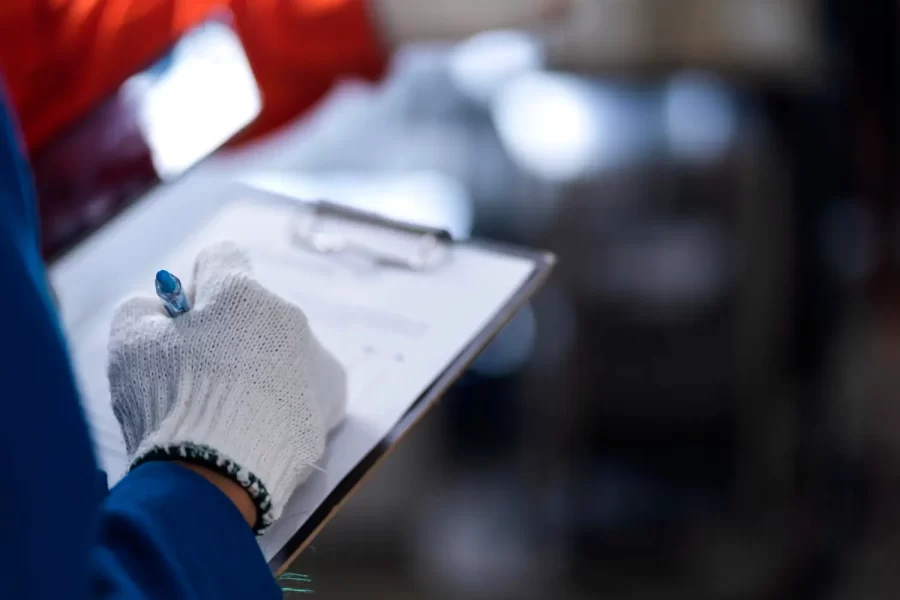
Trying to achieve perfection on the production line is one of the biggest mental loads on an operator’s shoulders. In an environment where manual tasks are intense, expecting millimetric precision while racing against seconds brings chronic stress and inevitable errors to employees. Sora Robotic collaborative robots (cobots) step in at this exact point, aiming to build an ecosystem where people work with robots, not like robots. When you hand over repetitive and tiring tasks to cobot systems, you reduce the mental fatigue of the personnel while radically solving inconsistencies in product quality.
Can Collaborative Robots Truly End Human Error? An Analysis with Technical Data
The human factor in production always contains a margin of error due to fatigue and distraction. Sora Robotic systems eliminate this variable from the equation thanks to their high precision and repeatability features. Today, the repeatability value of a modern collaborative robot has dropped to 0.01 mm; this means the robot can return to the point taught to it with the same perfection every time. With payload capacities up to 17.5 kg and reach distances reaching 1750 mm, cobots can work 24/7 without loss of performance, even in the heaviest and most tiring assembly processes. This technical competence helps you overcome bottlenecks in production by providing a 70% reduction in manual tasks.
What Should Be Done to Reduce the Mental Load of Employees? Expert Advice on Cobot Integration
While incorporating technology into a factory, not only the physical workforce but also the psychological comfort of the employees should be prioritized. Sora Robotic cobots, which do not require safety barriers or cages, stop automatically the moment they come into contact with a human thanks to integrated force/torque sensors, offering a safe working area. Handing over welding jobs that emit high UV rays or painting processes that damage the respiratory system—tasks considered risky in terms of occupational safety—to the robot makes the personnel feel more valued and safe. Remember that keeping the cobot’s operating speed below 500 mm/s or allowing the speed to be adjusted manually can reduce the stress levels of operators by up to 54%. Freeing your personnel from routine and low-value-added tasks and directing them to more creative and strategic duties directly increases job satisfaction and general well-being.
How to Manage Visual Inspection Error-Free in Quality Control? Data Collection and Traceability
Traditional methods in quality control processes are usually time-consuming, and small details that are overlooked can damage your brand reputation. Sora Robotic solutions can scan parts from different angles with millimetric precision by being equipped with 3D visual sensors and industrial cameras. Detection of missing components, identification of microscopic scratches on the surface, and automatic sorting of defective products are among the greatest advantages provided by the system. Cobots not only perform physical checks but also ensure full traceability and transparency by recording inspection results in a digital environment. This data flow allows you to identify the source of problems on the production line and continuously improve your processes. These systems, which provide a return on investment (ROI) in as short as 12 months, increase your competitiveness by carrying your production efficiency to levels of 95%.
Is Zero Error Possible in Production Thanks to Sora Robotic Cobots?
Quick Answer: Yes, Sora Robotic systems almost reduce human-induced errors to zero with high repeatability values down to 0.01 mm and 24/7 uninterrupted operation capacity. This technology reduces not only physical but also mental fatigue of employees by taking over monotonous and risky tasks, increasing job satisfaction.
How Do Sora Robotic Solutions Minimize Human Error in Quality Control Processes?
Traditional methods in quality control processes are usually time-consuming, and small details that are overlooked can damage your brand reputation. Sora Robotic solutions can scan parts from different angles with millimetric precision by being equipped with industrial cameras, 3D visual sensors, and advanced software. Detection of missing components, identification of microscopic scratches on the surface, and automatic sorting of defective products from the line are among the greatest conveniences offered by the system.
These systems do not just perform physical checks; they also provide full traceability and transparency by recording inspection results in a digital environment. Unlike fixed cameras, Cobots greatly reduce error rates in manual visual inspection because they can examine the part from multiple directions. This technology, which provides a return on investment (ROI) in as short as 12 months, makes operational excellence a standard by carrying your production efficiency to levels of 95%.
How Does Cobot Integration Reduce the Mental Load and Stress of Employees?
When incorporating technology into a factory, usually only the physical workforce is considered; however, the psychological comfort of the employees is just as critical. Sora Robotic cobots, which do not need safety barriers or cages, automatically stop or slow down the moment they contact a human thanks to integrated force and torque sensors. Handing over welding jobs that emit high UV rays or chemical dosing processes that damage the respiratory system—tasks considered risky for occupational safety—to the robot makes the personnel feel safer.
An important technical note: Keeping the cobot’s operating speed below 500 mm/s or allowing the operator to adjust the speed manually can reduce stress levels by up to 54%. When you free your personnel from routine and low-value-added tasks and direct them to more strategic duties, this new collaborative ecosystem directly strengthens employee engagement.
What Do Technical Repeatability Values Mean for Error-Free Production?
In production, the concepts of “accuracy” and “repeatability” are often confused. Accuracy is how close the robot gets to the target point; repeatability is the ability to return to the same point with the same precision every time. In Sora Robotic systems, the repeatability value is at an incredible level of 0.01 mm. This means that even if the robot performs the assembly or screw-driving process taught to it thousands of times, it will not show any deviation.
With payload capacities up to 17.5 kg and reach distances reaching 1750 mm, these robots can work without loss of performance even in the heaviest and most tiring assembly processes. The 70% reduction in manual workload helps you overcome bottlenecks in production while radically solving inconsistencies in product quality.
Does the Use of Cobots Lead to Layoffs?
No, the goal is not to leave people unemployed, but to free them from low-value-added and dangerous jobs and direct them to more creative and managerial positions.
Is an Expert Programmer Required to Use Sora Robotic Products?
Sora Robotic systems are designed with a “Plug-and-Play” concept. Thanks to its intuitive interface, operators can program the robot in a very short time by guiding it by hand.
Are Cobots Really Safe?
Yes. Sora Robotic cobots are manufactured with rounded-edge designs and advanced force sensors to stop at the moment of contact with a human; they do not need cages.
How Long Does the Return on Investment Take?
Sora Robotic solutions generally pay for themselves in about 12 months thanks to increased efficiency and a decrease in waste rates.
In Which Sectors Can It Be Used?
Sora Robotic products can be used in every field requiring assembly, welding, packaging, and quality control, from automotive to food, electronics to medical.